RTX 50-Series vs RTX 40-Series — Is Upgrading Worth It in 2026?
RTX 5090 vs RTX 4090 showdown

Whether to upgrade from an RTX 40-series to an RTX 50-series GPU depends on which 40-series card you have. If you own a RTX 4090 or RTX 4080 Super the performance gain from the RTX 5080 is real but not transformative. If you own a RTX 4060 Ti 16GB the jump to a RTX 5070 is substantial. DLSS 4 Multi Frame Generation is the feature that tips the balance for competitive gaming.
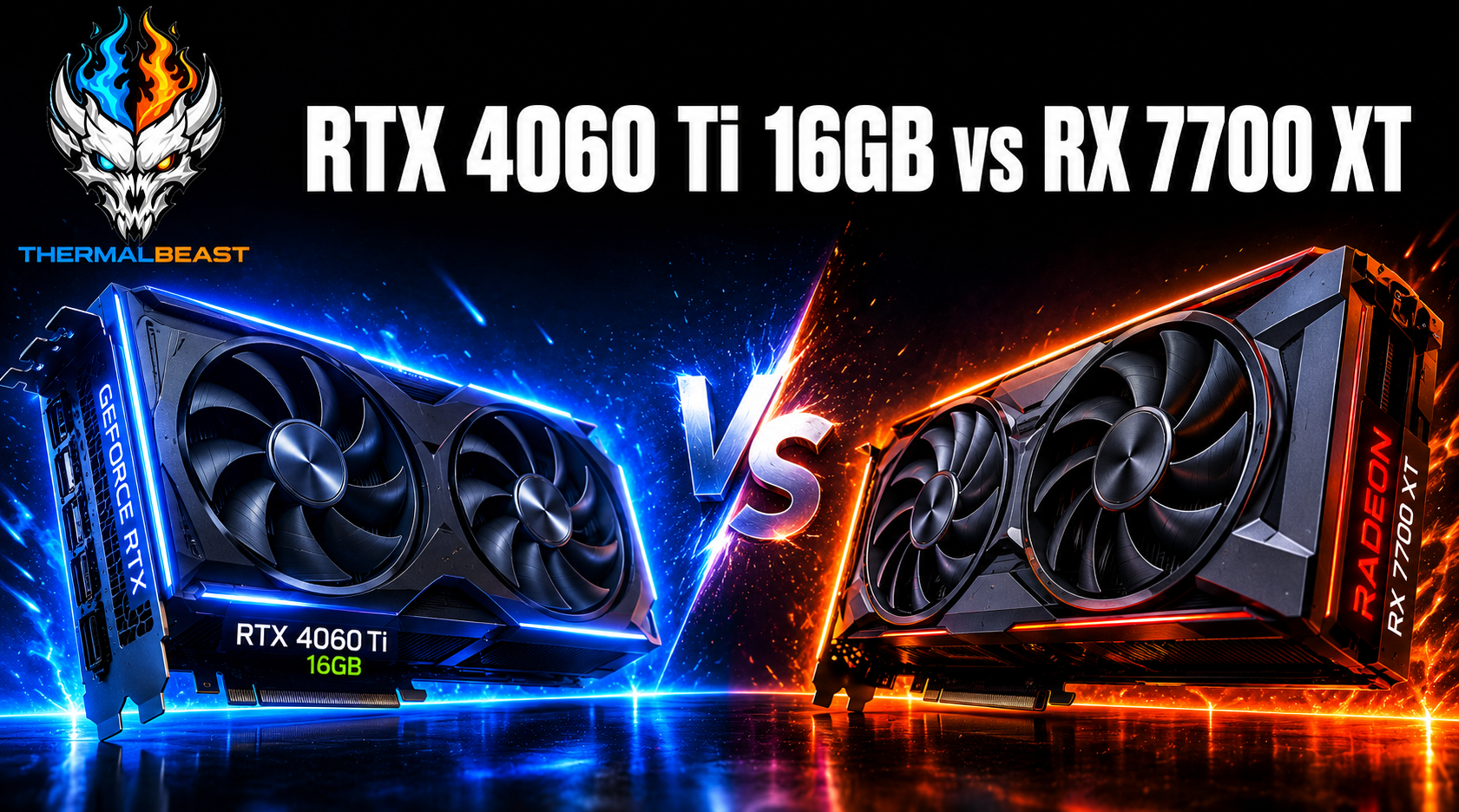
RTX 4060 Ti 16GB vs RX 7700 XT — Which 1440p GPU to Buy?

NVIDIA RTX 4060 Ti 16GB and AMD RX 7700 XT graphics cards angled toward each other in a side-by-side 1440p GPU comparison

Two GPUs fighting for the same sub-$350 budget targeting 1440p gaming. The RTX 4060 Ti 16GB has more VRAM — 16GB versus 12GB on the RX 7700 XT — and draws dramatically less power at 165W versus 263W. The RX 7700 XT leads in raw rasterization by 5 to 10 percent at 1440p due to its higher memory bandwidth. With DLSS 3 Frame Generation, the RTX 4060 Ti 16GB advantage in supported titles becomes significant. Within $30 of each other buy the RTX 4060 Ti 16GB. Never buy the 8GB RTX 4060 Ti.

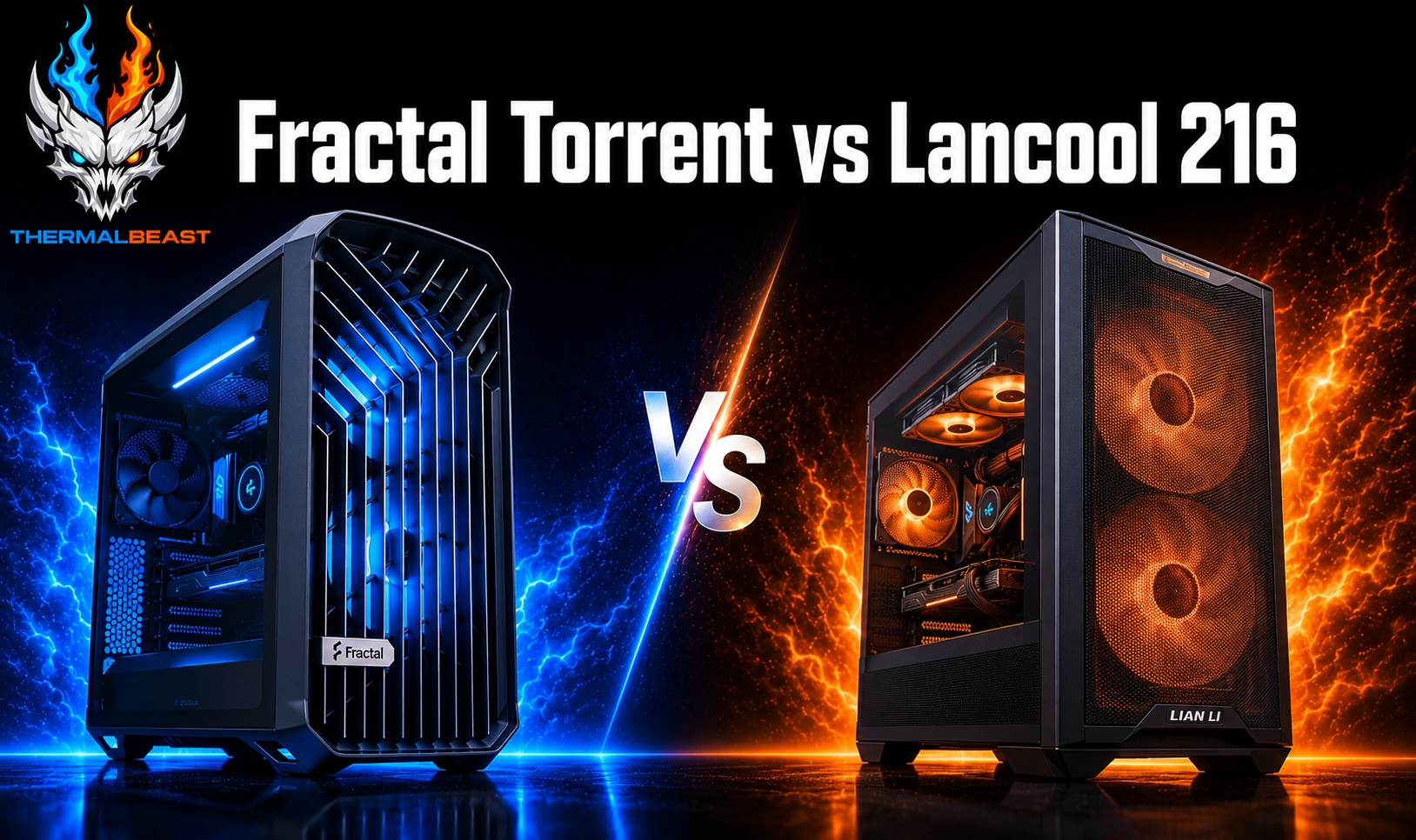
Fractal Design Torrent vs Lian Li Lancool 216 — Which Case to Buy?

Fractal Design Torrent and Lian Li Lancool 216 mesh PC cases angled toward each other in a side-by-side airflow comparison

Both are the most recommended airflow mid-towers available. The Fractal Design Torrent with two 180mm front fans and two 140mm bottom fans posts the lowest GPU temperatures of any mid-tower case in its class — 5 to 8 degrees cooler than the Lian Li Lancool 216 with a high-end GPU. For builds with a RX 9070 XT or RTX 5080, the Torrent thermal advantage justifies the price difference. For mid-range builds with an RX 7700 XT or RTX 4060 Ti, the Lancool 216 is more than sufficient and saves $75.

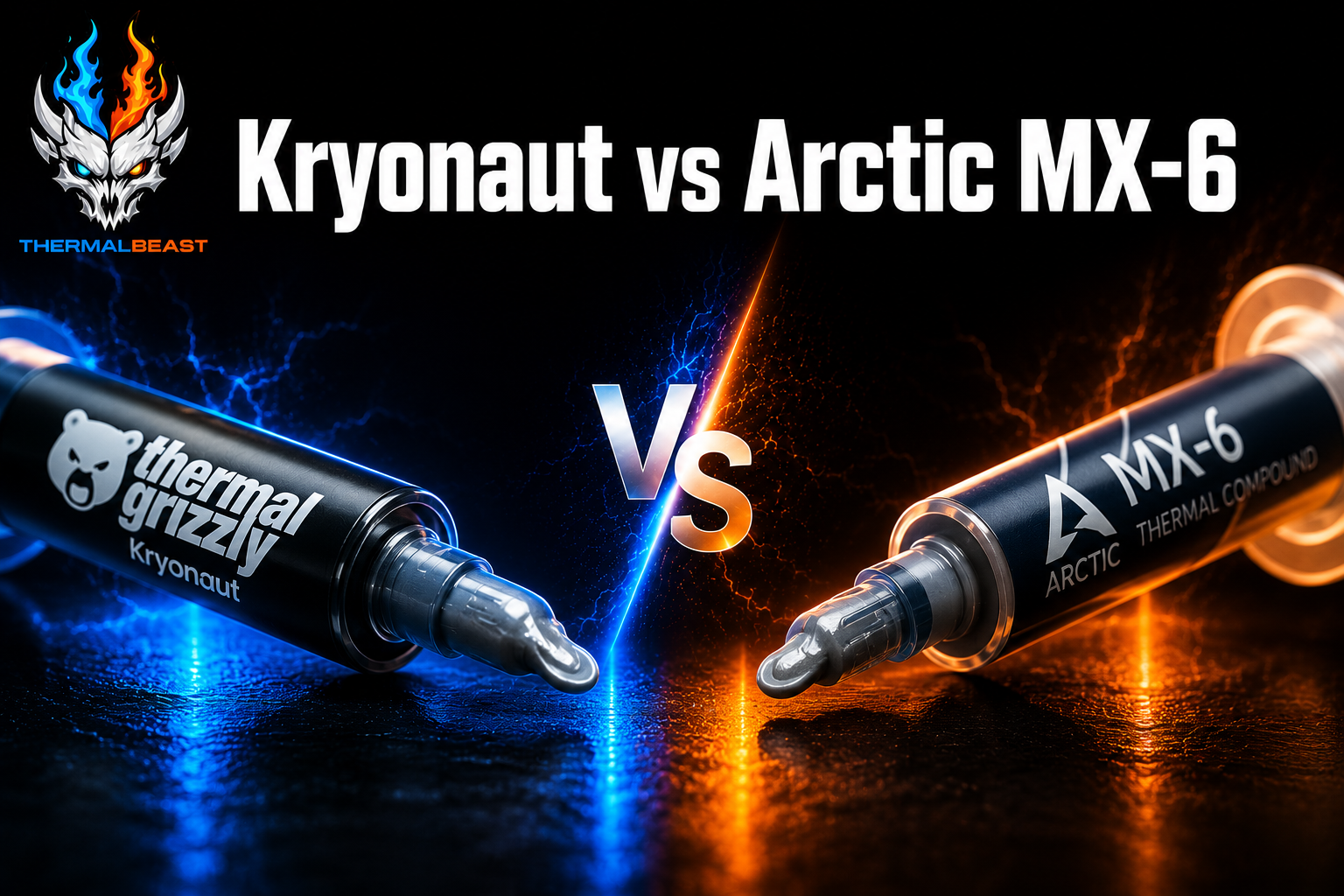
Thermal Grizzly Kryonaut vs Arctic MX-6 — Which Thermal Paste to Buy?

Thermal Grizzly Kryonaut and Arctic MX-6 thermal paste syringes angled toward each other in a side-by-side comparison

The real-world temperature difference between Thermal Grizzly Kryonaut and Arctic MX-6 is 0 to 2 degrees Celsius. For practical purposes they perform identically. The choice comes down to use case: Kryonaut is the best peak performer for a one-time CPU installation or overclocking. MX-6 carries an 8-year performance guarantee and resists degradation better, making it the smarter choice for used GPU re-pastes or systems that run sustained high loads. Both are non-conductive and safe to apply to CPUs and GPUs. Read the full comparison.

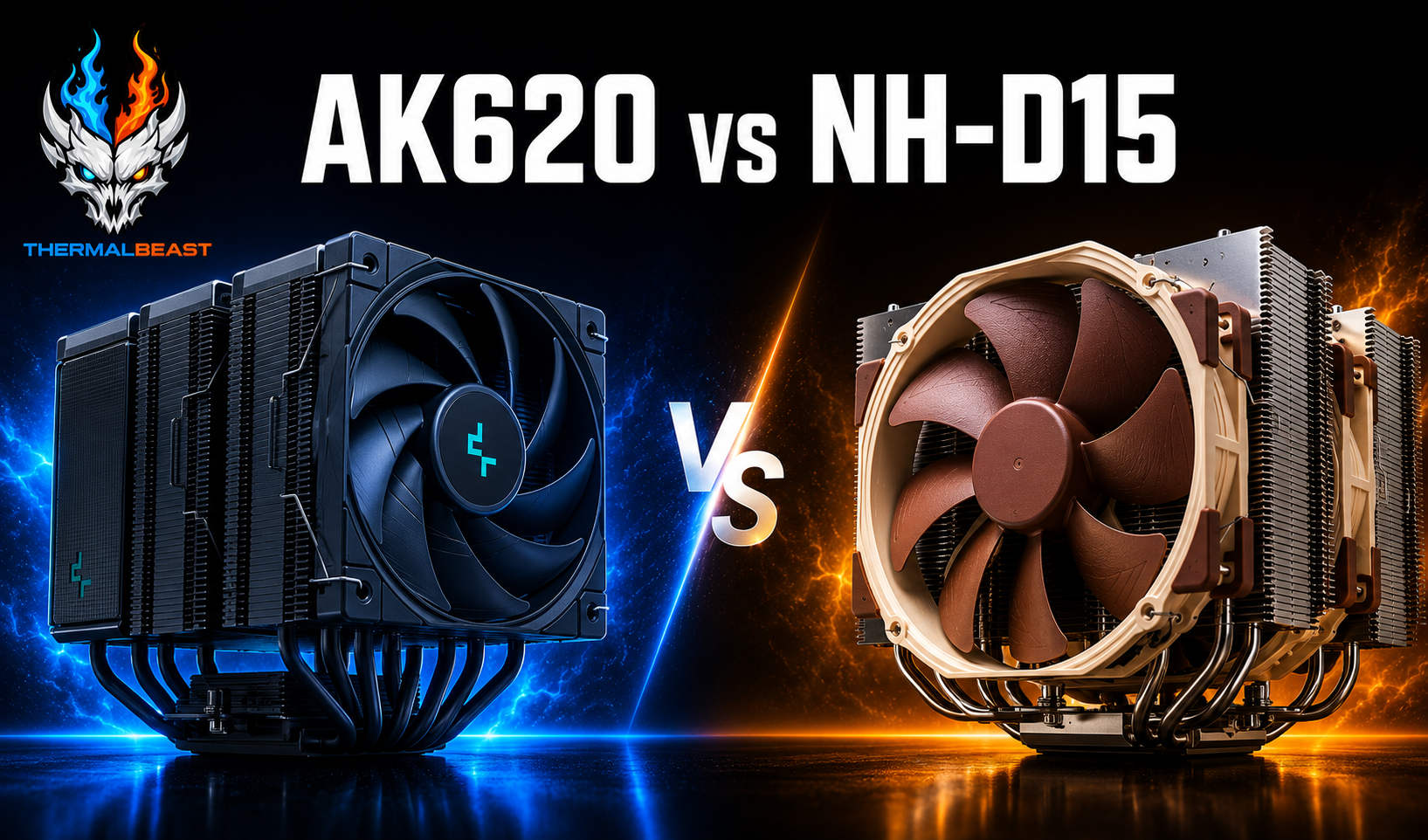
Deepcool AK620 vs Noctua NH-D15 — Which CPU Cooler to Buy?

One costs $50. The other costs $100 to $120. Both are dual-tower air coolers. The Deepcool AK620 performs within 2 to 4 degrees Celsius of the Noctua NH-D15 G2 under gaming loads at half the price. The NH-D15 G2 wins on noise under sustained all-core workloads and is the correct choice for high-end workstation builds. For 90 percent of gaming builds the AK620 is the right answer. Always pair with Thermal Grizzly Kryonaut for best results. Read the full comparison.

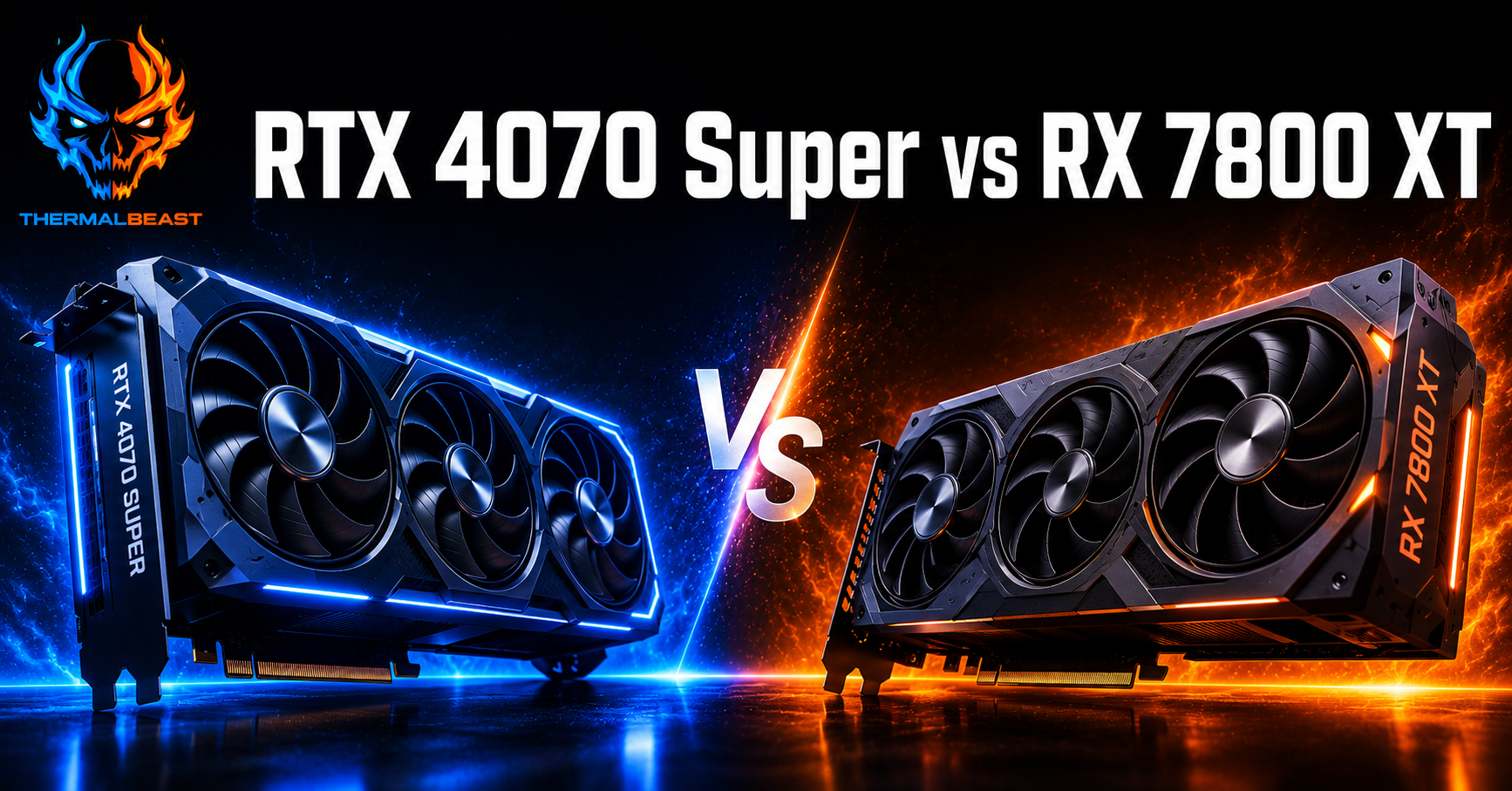
RTX 4070 Super vs RX 7800 XT — Which Should You Buy in 2026?

NVIDIA RTX 4070 Super and AMD RX 7800 XT graphics cards angled toward each other in a side-by-side 1440p GPU comparison

The RTX 4070 Super and RX 7800 XT fight for the same 1440p gaming budget. The RTX 4070 Super draws only 220W versus 263W for the RX 7800 XT — a meaningful thermal advantage in warm environments. The RX 7800 XT has 16GB VRAM versus 12GB on the RTX 4070 Super, which matters increasingly at 1440p maximum texture settings. Within $30 of each other buy the RTX 4070 Super for DLSS 3 Frame Generation. If the RX 7800 XT is $40 or more cheaper buy that. Read the full comparison.

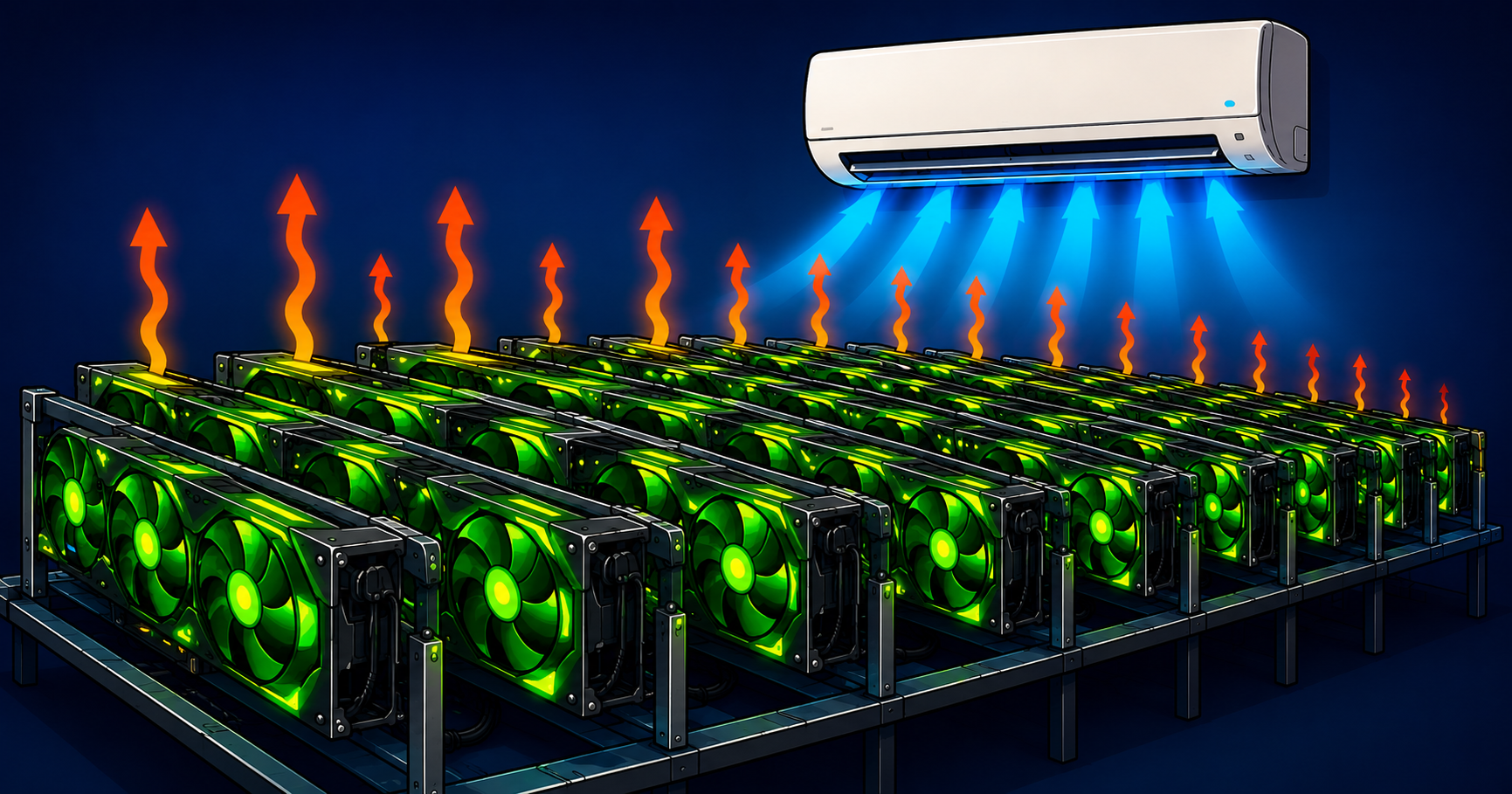
What Running 55 GPUs in One Room Taught Me About PC Cooling

A mini split directing cold air onto a large GPU mining setup while heat escapes upward.

Running 55 RTX 3080s and RTX 3090s simultaneously in a 12×12 bedroom in South Florida generates between 12,000 and 17,000 watts of continuous heat. Standard fans accomplished almost nothing because fans move air but do not remove heat from a room. The solution was a 1.5-ton ductless mini split blowing cold air at GPU level combined with a whole-house exhaust window fan pulling hot air out at ceiling level. That complete thermal loop is the foundation of everything on this site. Read the full story.

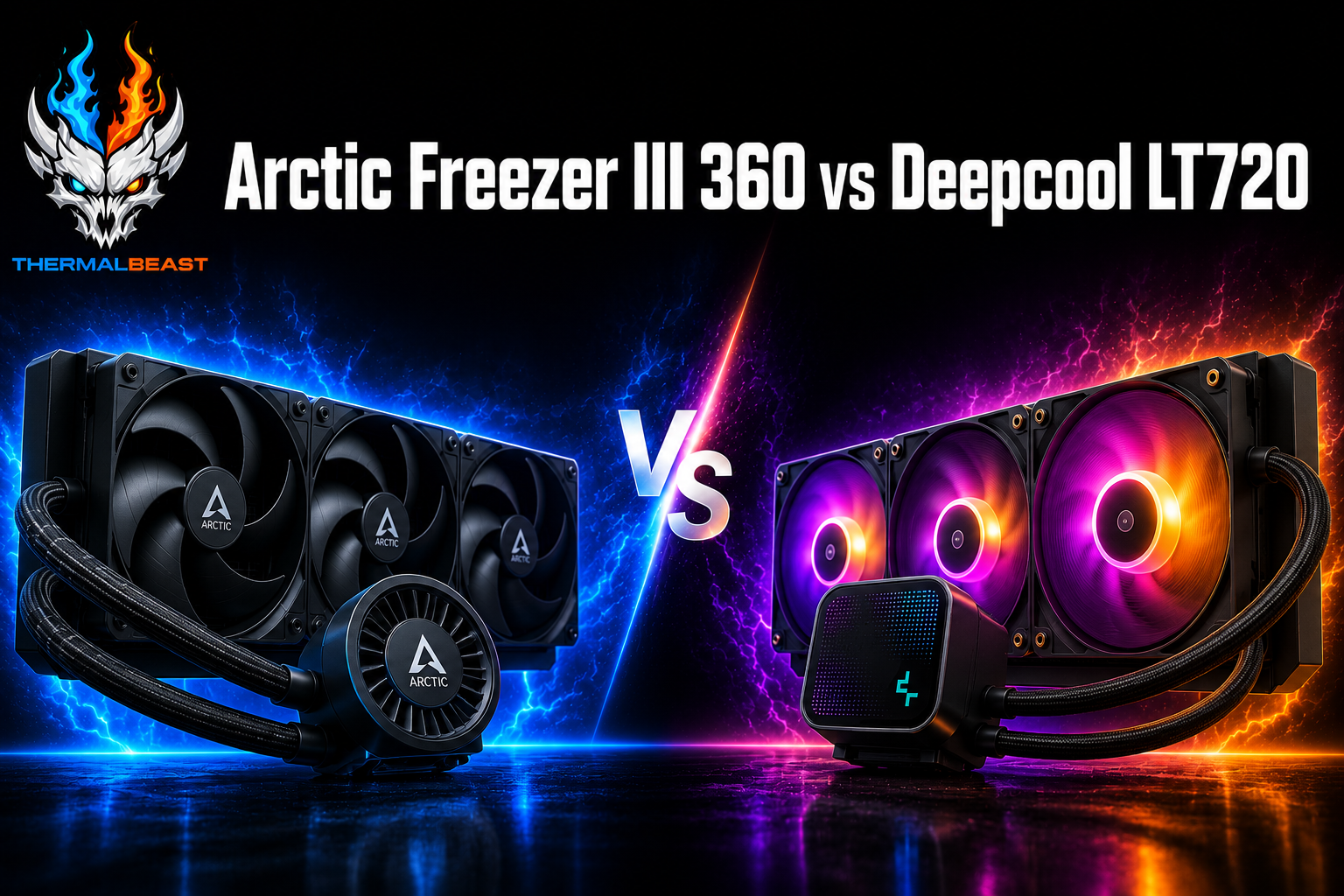
Arctic Liquid Freezer III 360 vs Deepcool LT720 — Which AIO to Buy?

Arctic Liquid Freezer III 360 and Deepcool LT720 360mm AIO coolers angled toward each other in a side-by-side comparison

Both are top-rated 360mm AIOs. The Arctic Liquid Freezer III 360 consistently posts CPU temperatures 1 to 4 degrees lower than the Deepcool LT720 under sustained loads, costs $40 less, and carries a 6-year warranty. The LT720 wins on aesthetics with full ARGB fans and an illuminated pump head. For pure performance per dollar the Arctic is the clear winner. For a windowed build where aesthetics matter the LT720 justifies its premium. Both outperform the Deepcool AK620 by only 2 to 4 degrees under gaming loads at significantly higher cost. Read the full comparison.

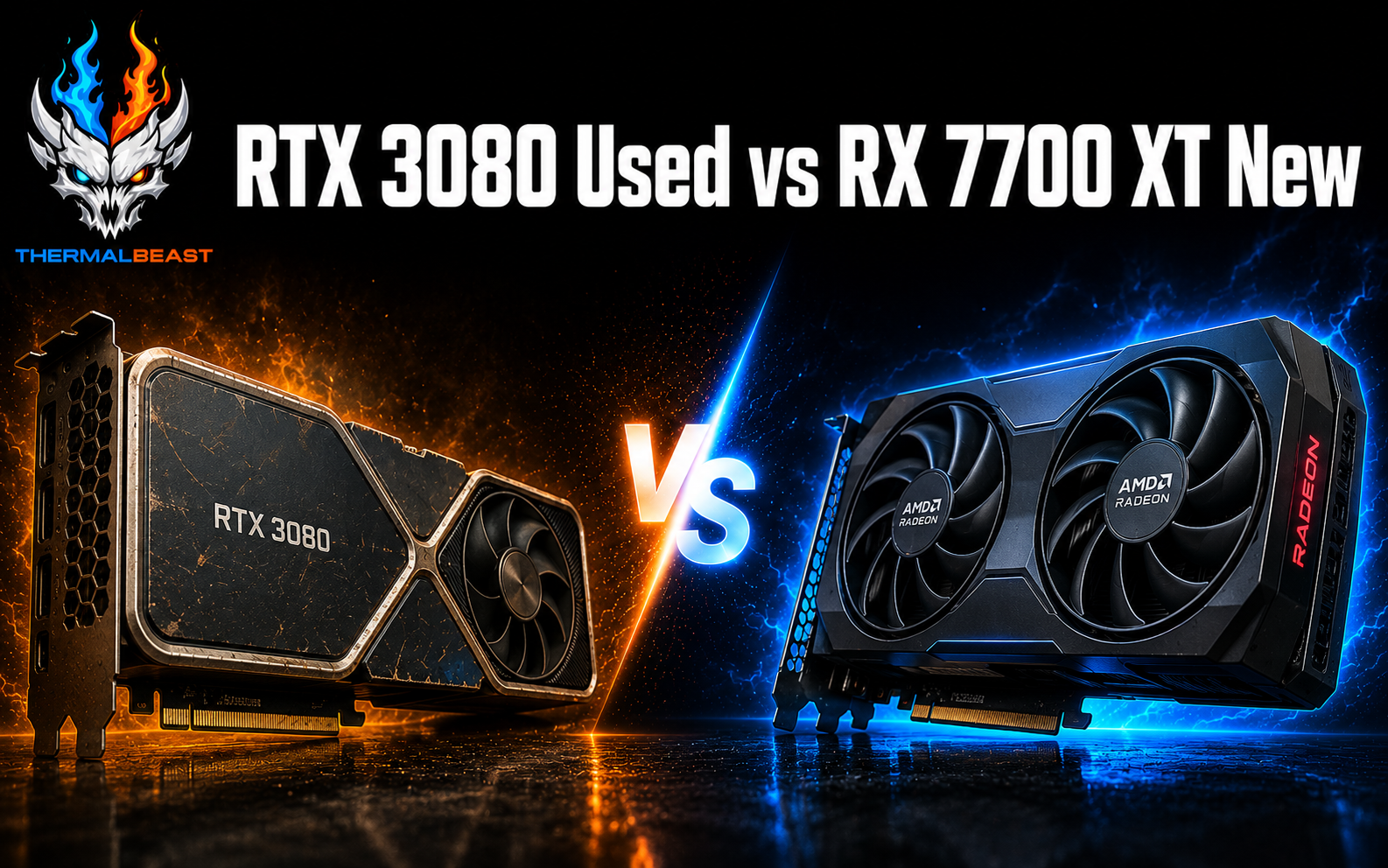
RTX 3080 vs RX 7700 XT — Used vs New, Which to Buy?

Used NVIDIA RTX 3080 and new AMD RX 7700 XT graphics cards angled toward each other in a used versus new GPU comparison

A used RTX 3080 at $180 to $250 versus a new RX 7700 XT at around $290. Having run 55 of these cards, a well-maintained RTX 3080 is often in better condition than a gaming card that ran hot for years. The RTX 3080 leads in raw rasterization by 5 to 10 percent at 1440p. The RX 7700 XT has 12GB VRAM versus 10GB — a difference starting to matter. If the price gap is $80 or more, buy the used RTX 3080 and immediately re-paste with Thermal Grizzly Kryonaut. Under $50 gap, buy the new RX 7700 XT for the warranty. Read the full comparison.